The Basics
What Are PFAS?
PFAS stands for per- and polyfluoroalkyl substances. The name covers a family of more than 12,000 synthetic chemicals, all sharing one defining feature: a chain of carbon atoms bonded to fluorine. That bond is one of the strongest in organic chemistry. It does not break down in water. It does not break down in soil. It does not break down in your body. That is why scientists call them forever chemicals.
Manufacturers have used PFAS since the 1940s because their properties are useful. They repel water and oil. They withstand extreme heat. They reduce friction. Those same properties make them a serious public health problem once they escape into the environment, which they do constantly.
The Science
The Chemistry
Every PFAS molecule shares a basic structure: a carbon backbone with fluorine atoms attached. Fluorine is the most electronegative element on the periodic table. When it bonds with carbon, it creates a connection with a bond dissociation energy around 544 kJ/mol. A carbon-hydrogen bond sits around 413 kJ/mol. That difference is why PFAS resist breakdown so effectively.
PFAS bind to proteins in blood and organs, particularly the liver and kidneys. Unlike fat-soluble contaminants, they do not accumulate in fatty tissue. They accumulate in protein-rich tissues. The primary elimination pathway is excretion, a slow process. PFOS has an estimated half-life in the human body of approximately five years.
Exposure Routes
How You Are Exposed
Drinking Water
The most direct exposure route for most people. Contamination is highest near military bases, industrial facilities, and airports.
Food Packaging
Grease-resistant coatings on fast food wrappers, microwave popcorn bags, and pizza boxes leach PFAS into food when heated.
Cookware
Non-stick pans release PFAS when scratched or overheated above 500°F. Worn or damaged pans pose greater risk.
House Dust
Carpeting, upholstery, and stain-treated fabrics shed PFAS into indoor dust. Young children with hand-to-mouth contact face elevated exposure.
Personal Care Products
Some dental floss, cosmetics, and shampoos contain PFAS. Skin absorption adds to cumulative exposure.
Occupational
Firefighters, semiconductor workers, and textile workers face exposure levels well above the general population.



Health Risks
Health Effects
The strongest evidence links PFAS exposure to several serious conditions. The data comes from occupational studies of workers at manufacturing plants, community studies near contamination sites, and animal studies. Dose, duration, and life stage all matter. Exposures during pregnancy and early childhood carry higher risk.
Kidney Cancer
EPA classifies PFOA as a human carcinogen based on occupational study evidence.
Thyroid Disease
PFAS interfere with thyroid hormone binding and production.
Immune Suppression
Children with higher prenatal PFAS exposure show reduced vaccine antibody responses.
High Cholesterol
One of the most consistent findings across studies. Correlates with elevated LDL cholesterol.
Liver Disease
PFAS accumulate in the liver and alter lipid metabolism.
Pregnancy Complications
Higher PFAS levels associate with preeclampsia and reduced birth weight.
Timeline
A Brief History of PFAS
1938
DuPont accidentally discovers PTFE, later sold as Teflon. The first commercial PFAS.
1950s
3M develops PFOS-based Scotchgard for stain resistance on carpets and textiles. PFAS production scales up significantly.
1960s
The U.S. military adopts aqueous film forming foam (AFFF) for fighting jet fuel fires. Widespread use at military bases begins contaminating surrounding communities.
1998
3M internal documents show the company knew about PFAS contamination in human blood since the 1970s.
2005
EPA fines DuPont $16.5 million for concealing PFOA health risks near its Washington Works plant in Parkersburg, WV.
2023
3M agrees to a $12.5 billion settlement to resolve PFAS water contamination claims by public water utilities.
2024
EPA finalizes the first national drinking water standards for six PFAS, setting an MCL of 4 parts per trillion for PFOA and PFOS.
Regulation
Current Regulation
Federal regulation of PFAS in drinking water arrived slowly. For decades, the EPA monitored PFAS without setting enforceable limits. That changed in April 2024 with the first national drinking water standards.
Chemical
MCL
MCLG
Status (Feb 2026)
PFOA
4 ppt
Zero
In effect. Compliance deadline 2031.
PFOS
4 ppt
Zero
In effect. Compliance deadline 2031.
PFNA
10 ppt
10 ppt
Under litigation. D.C. Circuit denied EPA rescission, Jan 2026.
PFHxS
10 ppt
10 ppt
Under litigation. Same status as PFNA.
HFPO-DA (GenX)
10 ppt
10 ppt
Under litigation. Same status as PFNA.
Take Action
What You Can Do Now
01
Check your water
Request your water system’s Consumer Confidence Report. Search the EWG Tap Water Database at ewg.org/tapwater for your zip code.
02
Filter If Necessary
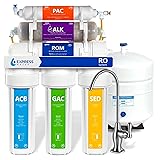
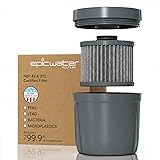
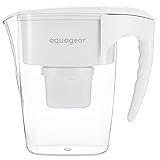
If your water shows PFAS above the MCLs, install a certified reverse osmosis or activated carbon filter. Boiling water does not remove PFAS.
03
Reduce Product Exposure
Replace worn non-stick cookware. Avoid reheating food in fast food packaging. Choose PFAS-free personal care products where options exist.
04
Know Your Risk Factors
If you live near a military base, airport, chemical plant, or landfill, your risk of water contamination is higher. If you are pregnant or have young children, reducing PFAS exposure is more urgent.
05
Stay Informed
PFAS regulation is evolving rapidly. Compliance deadlines, litigation over the contested MCLs, and state-level rules all affect what protections are in place.
Water Filters